MOAI Journal · How-to
Which SUP Board Suits You? A Practical Guide
You're scrolling through board after board on the website, and they all seem to look alike: sturdy, suitable for beginners and experienced paddlers alike. Yet not every board suits every paddler, and the right choice depends on a few concrete things: your weight, your experience, where you store and transport the board, who else is coming along, and the water you paddle on most.
In short: first work out what you'll use the board for, then look at your weight to get the right volume, and let the water you paddle on most often decide the rest.
What will you use the board for?
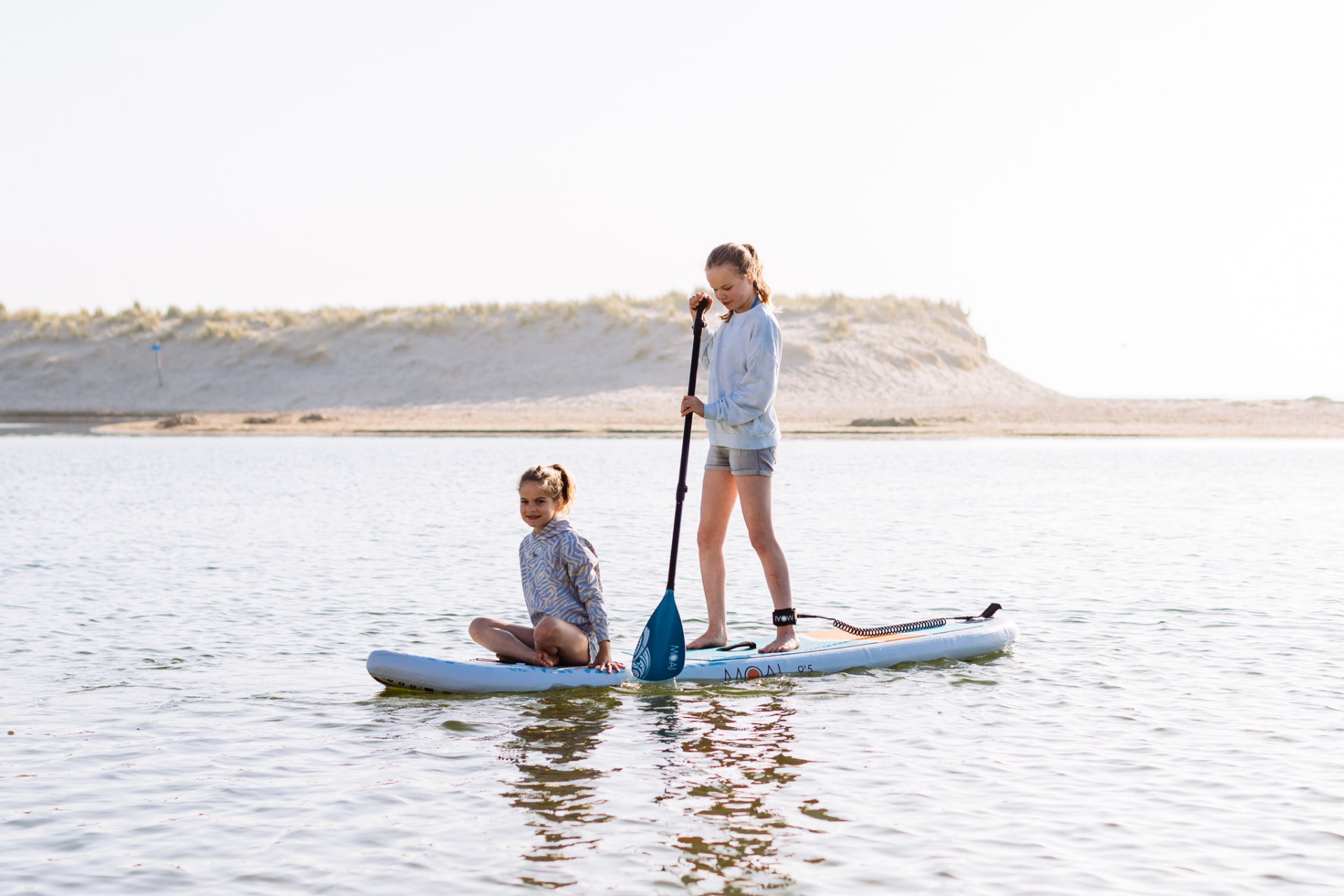
Start with how you'll use it. Want to do SUP yoga, bring a child along, or looking for a board for a team outing? There's a clear type of board in the range for that. Want to paddle recreationally? Then you have plenty of choice, with only small differences between models.
Within the recreational boards, the main differences are speed, stability, and who can come along. The MOAI 11' is the fastest board in the range. The MOAI 12'4 is wide enough to bring a child or dog along too. The MOAI 10'6 and the touring models are wider through the middle, which makes them especially stable. The shape of the nose matters too: a rounded nose turns more easily, a pointed nose cuts through the water faster.
Weight determines the volume
The more weight a board has to carry, the more volume it needs. A rule of thumb from the industry: for a beginner paddling calmly, a board needs roughly one litre of volume per half a kilo of body weight. If you weigh 82 kilos, you're looking at a board of at least 180 litres. Bringing someone else along occasionally, or a heavy bag? Just add that weight on top.
Where do you paddle most often?
Heading out on a large or calm lake for long trips? A touring board like the MOAI 12'6 is the logical choice: it tracks straighter, which means fewer paddle strokes. Mostly paddling a river? Check first how shallow and winding it is, since on shallow, uneven water you run a higher risk of damaging the board. Looking for the calm of the sea? Then the MOAI 10'6 is a board that suits that well.
And what about the paddle?
Most board sets already come with a paddle, but if you want to choose one separately, you have a choice of fibreglass, aluminium, bamboo with fibreglass, or carbon. A few hours of paddling quickly adds up to a few thousand strokes, and you'll really feel a heavier paddle. Only paddling occasionally? Then aluminium is more than enough. Paddling more often and further? Then investing in a lighter paddle is usually worth it.
In the end, the choice comes down to your own situation, not which board scores best on paper. Know where you'll paddle most and with whom, and the rest usually falls into place.
Frequently asked questions
Which SUP board is best for beginners? The MOAI 10'6 is the easiest start for most people: it's stable, turns easily, and suits almost any user.
Which SUP board is suitable for a river? First check how shallow and winding the river is. If in doubt, a wider, stable board like the MOAI 10'6 is a safe choice; on deep, calm water, a narrower board like the MOAI 11' can give you more speed.
Which board should I choose for the sea? For calm paddling at sea, the MOAI 10'6 works well. Want to cover longer distances? Then a touring board like the MOAI 12'6 is the more logical choice.